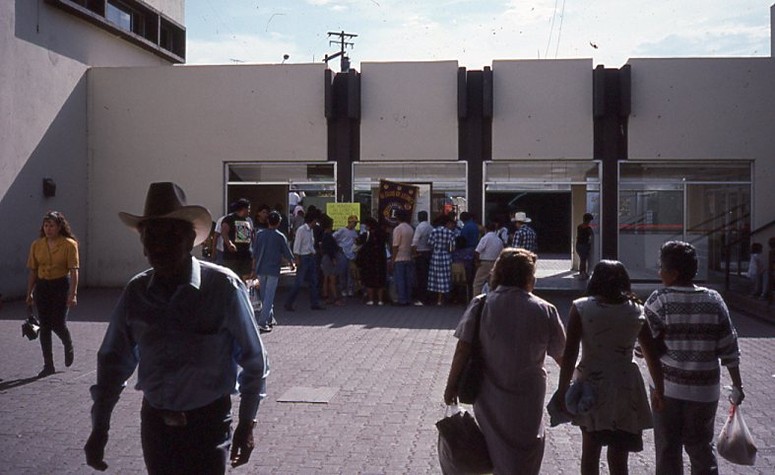
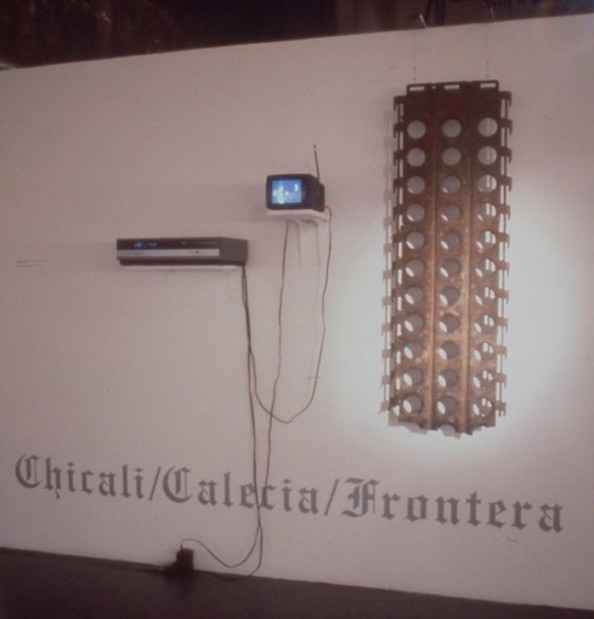
2-1 Border
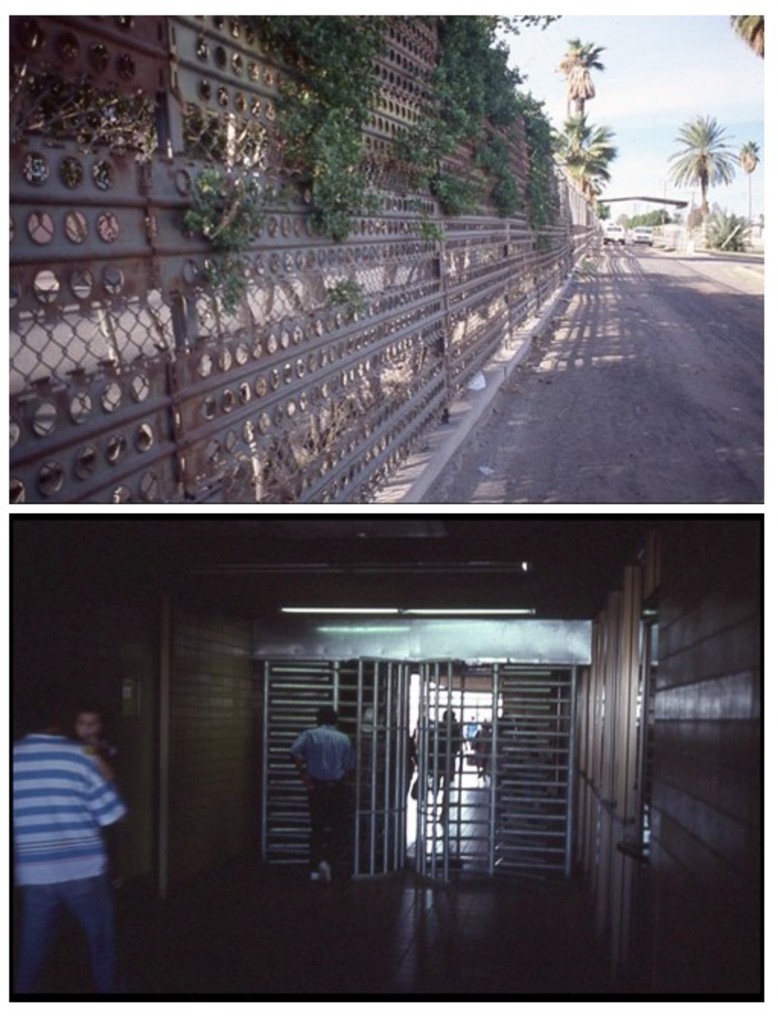
Crossing Action, 1991, TRT: 01:24 minutes. Video by Armando Rascón
|
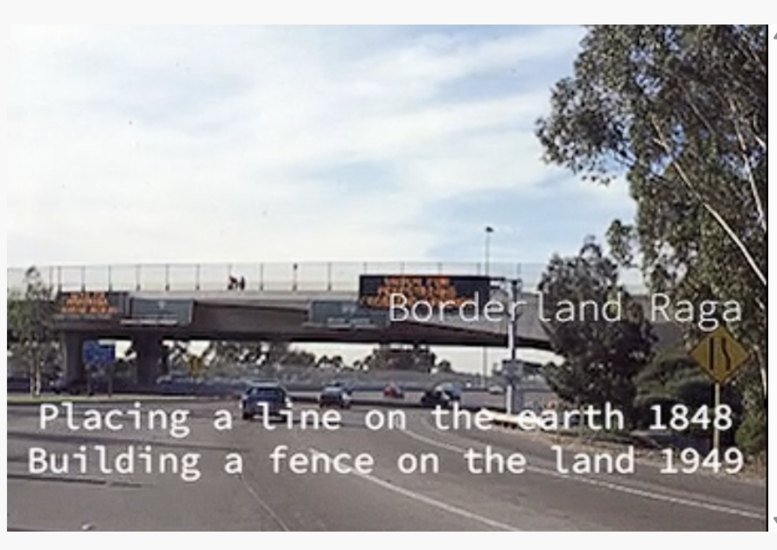
2-2 Borderland Raga (video),
1984-93. TRT 12:35 minutes. Video by
Armando Rascón
|
2-3
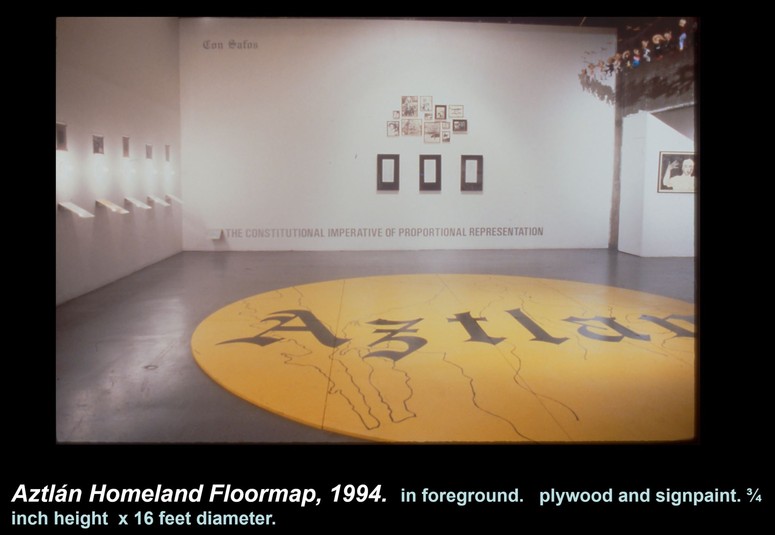
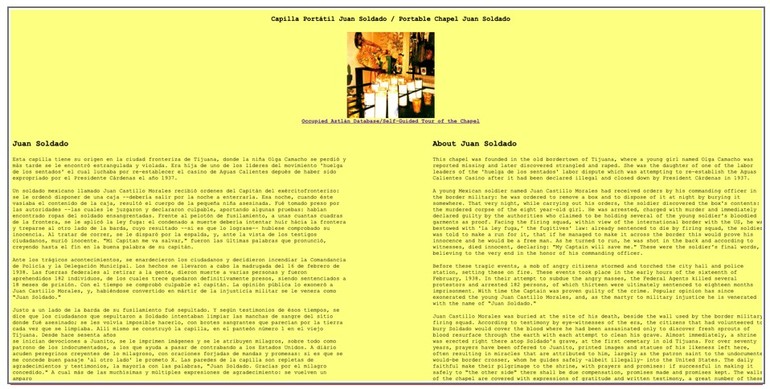
Occupied Aztlán, 1994. Media project created by artist Armando
Rascón, recipient of the Adaline Kent Award exhibition at the San Francisco Art
Institute.
|
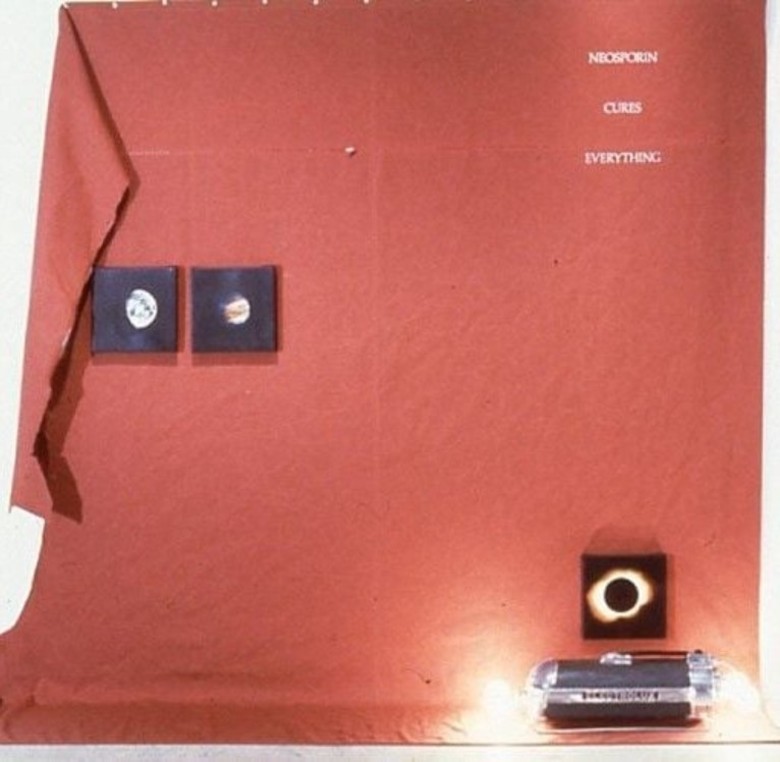
3-1
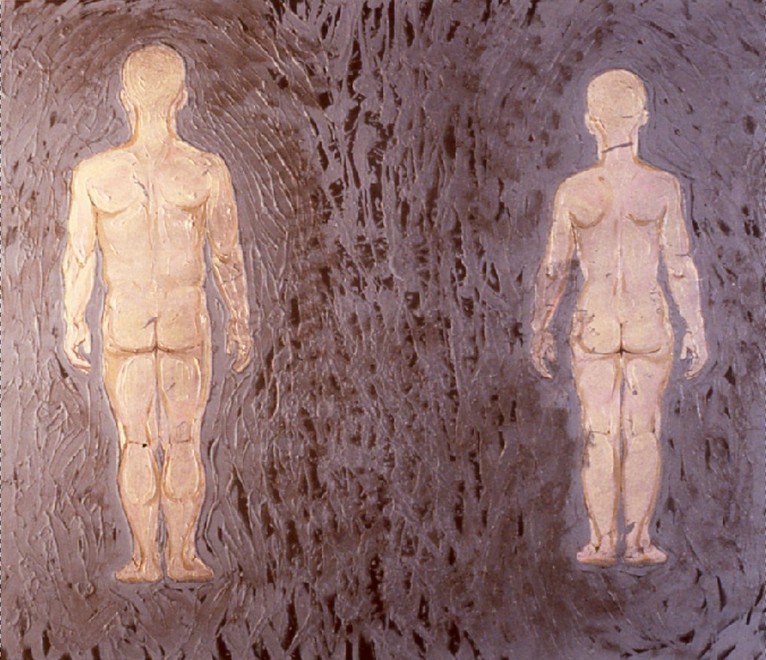
Untitled (Double Cryogenic)
1986
Graphite, acrylic on canvas.
Photo: Armando Rascón
|
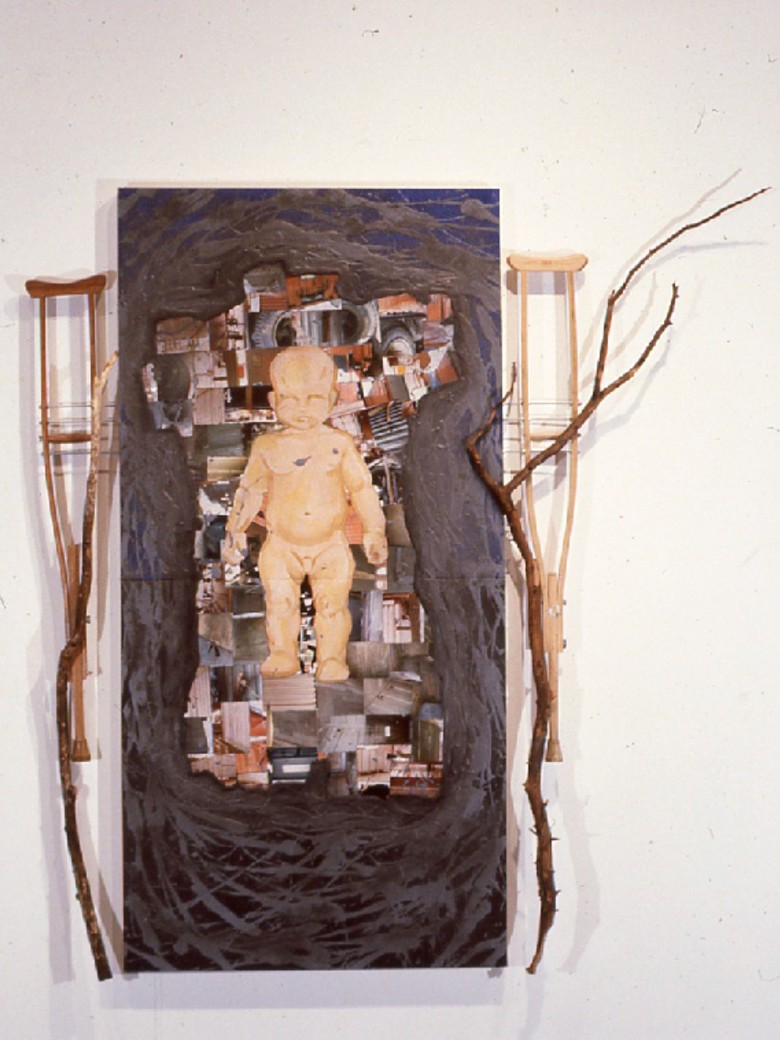
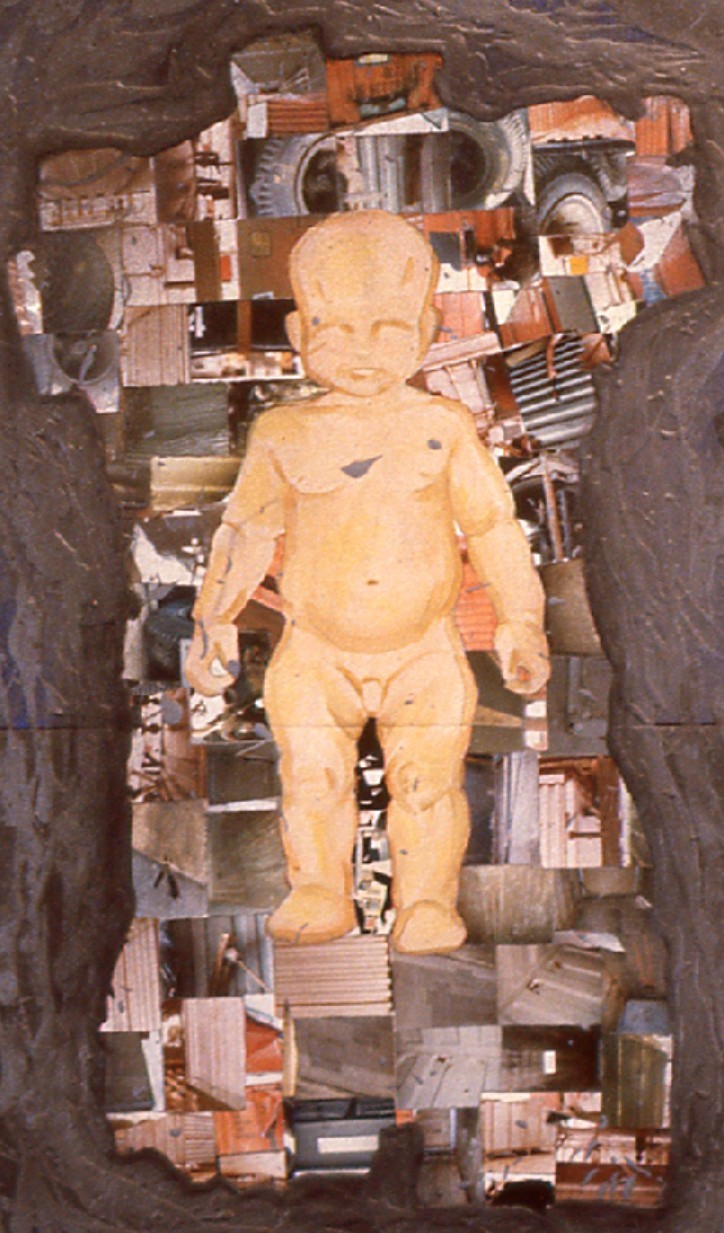
3-2
Domine Mundi
1986
Photography, acrylic, graphite, wood, stainless steel bolts.
Photo Armando Rascón
DETAIL BELOW
|
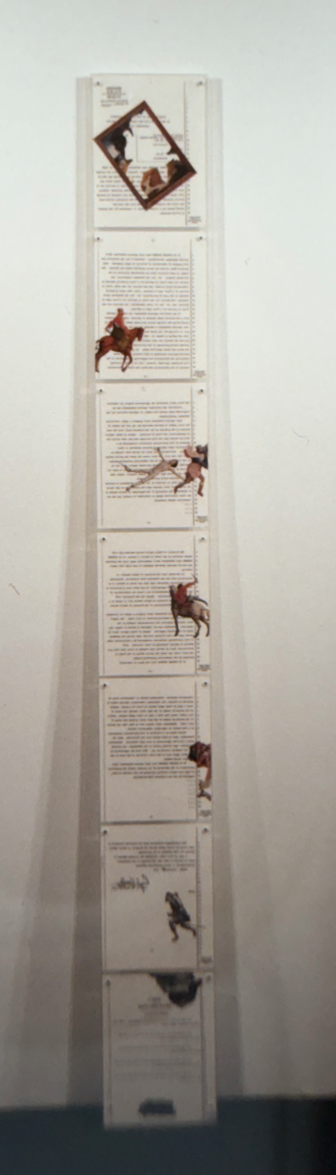
3-3
Untitled (Martyr Totem)
1989-90
Plexiglas,collaged offset images, and legal document.
Photo: Armando Rascón
|
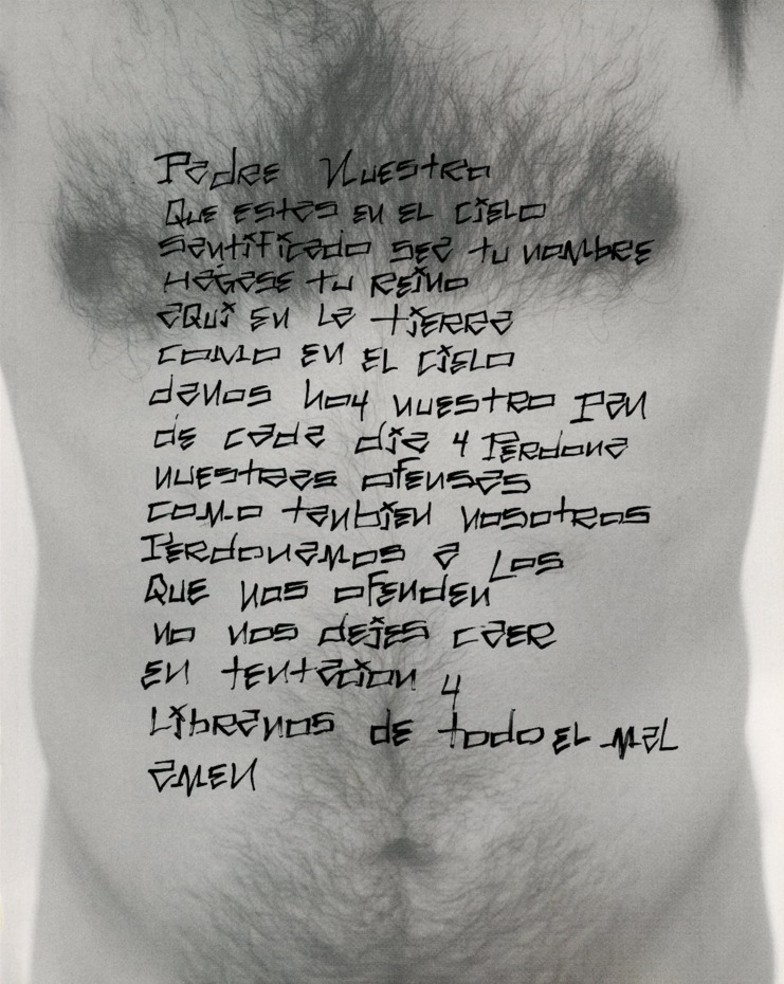
3-4
Untitled (Prayer)
Ink on silver print.
Photo: Armando Rascón
|
3-5
The Biology of Moral Systems 1987
Photo: Wolfgang Dietz
|
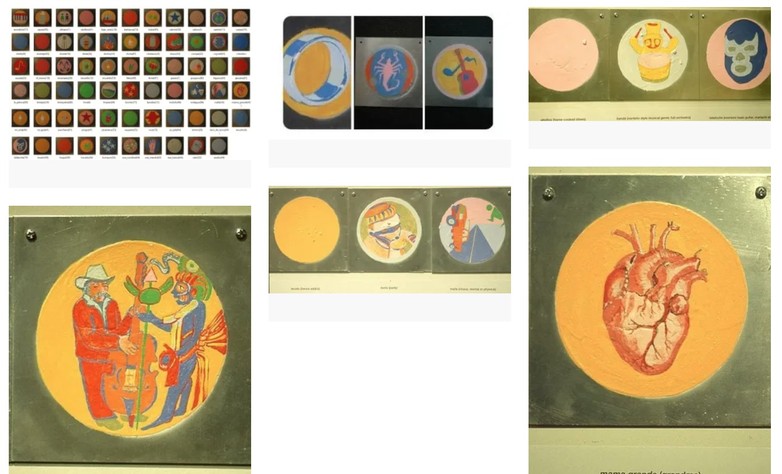
3-6
Naco Nocturnes: The Tortilla Paintings 2006 99 works - enamel, aluminum, maize, and resin.
Photos: Armando Rascón
|
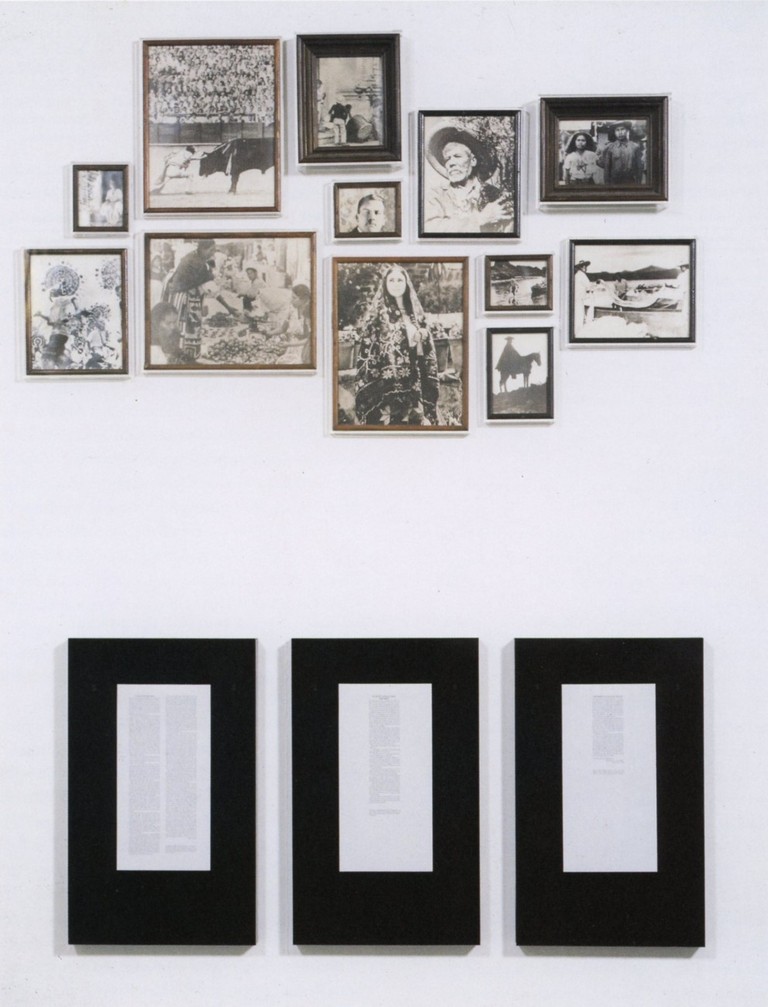
3-7
Artifact with Three Declarations of Independence Plexiglas, antique photographs, velox texts.
Photo credit: Ben Blackwell
|
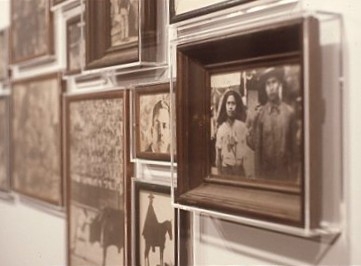
Detail:Artifact with Three Declarations of Independence Plexiglas, antique photographs, velox texts. Photo: Armando Rascón
|
3-8.Border Metamorphosis: The Binational Mural Project 1998-2002
Photo: Armando Rascón
|
4-1 Reinterpreting Mrs. Belcher’s
American History Lesson, Fourth Grade, Jefferson Elementary, Fourth Grade.
Calexico, California, School Term 1966-67.
Graded school tests, from 1966, with related photography on 20
aluminum panels above each test.
|
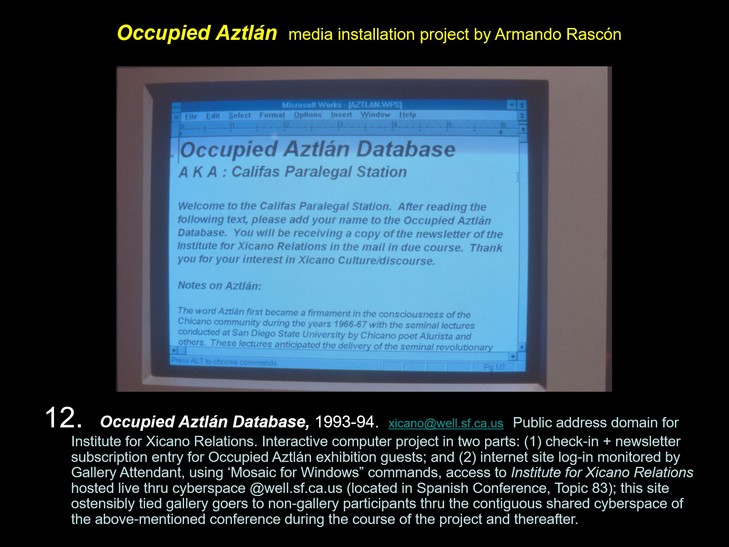
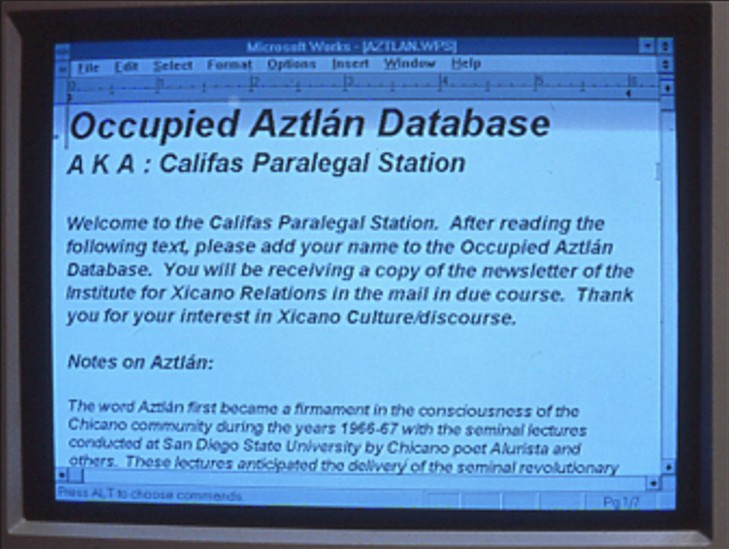
7-1 Figure
1. Occupied Aztlán Database, 1993–94. Courtesy of Armando Rascón.
Photo: Armando Rascón
|
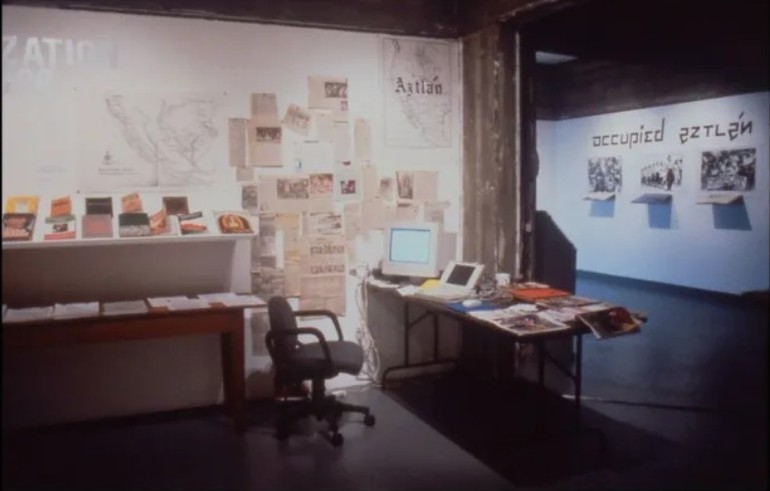
7-2 Figure
2. Califas Paralegal/Research Station, 1993. Courtesy of Armando Rascón.
Photo Armando Rascón
|
6-1
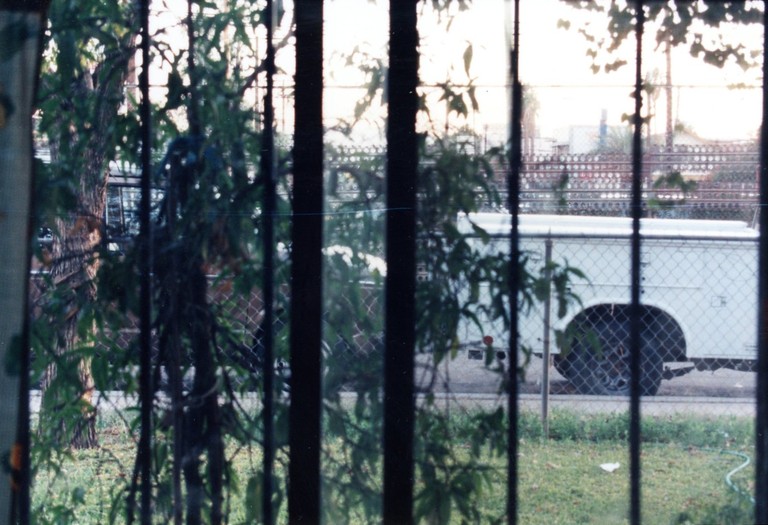
View of the US/Mexico border fence as seen through Tía Andreita's kitchen window, East First Street, Calexico, California
1993
Fig. 1 Armando
Rascón, View of the US/Mexico border fence as seen through Tía Andreita's
kitchen window, East First Street, Calexico, California,
|
6-2 + 6-3
Figs. 2-3. Video
stills from Border Crossing Action (1991)
Photos: Armando Rascón
|
6-4
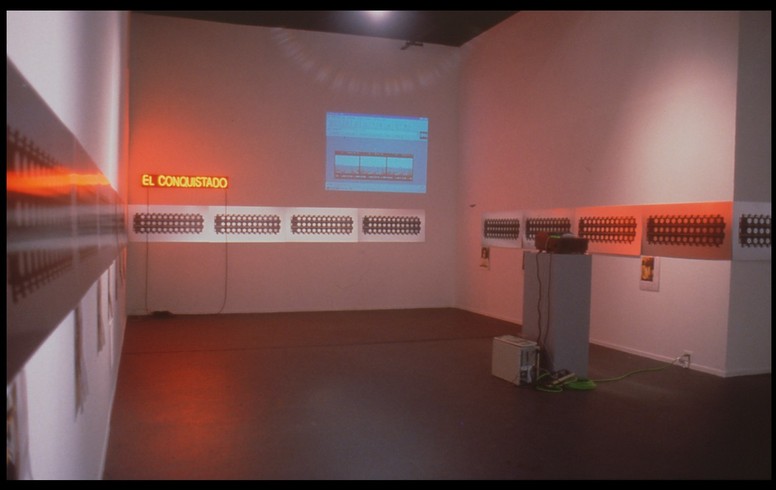
Fig. 4.
Installation shot of exhibition Armando Rascon: Postcolonial Califas at Centro Cultural de la Raza, San Diego (1997)
Photo Armando Rascón
|
6-5
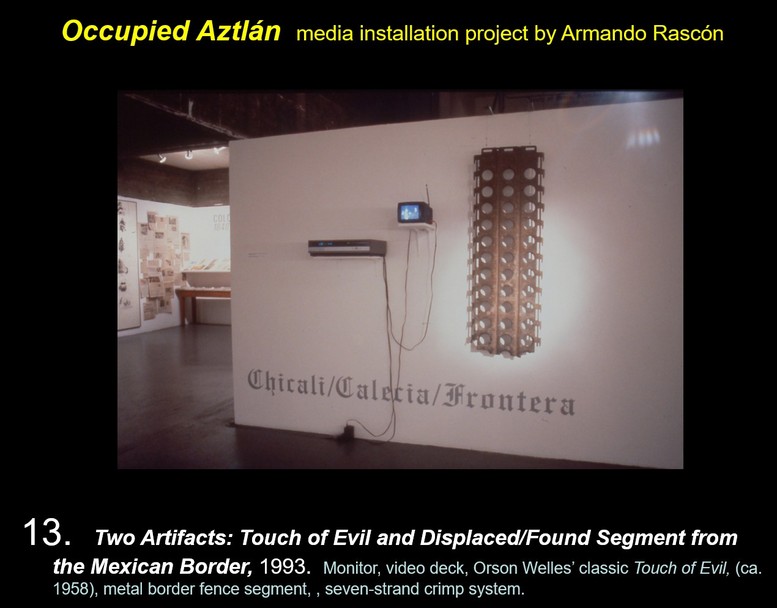
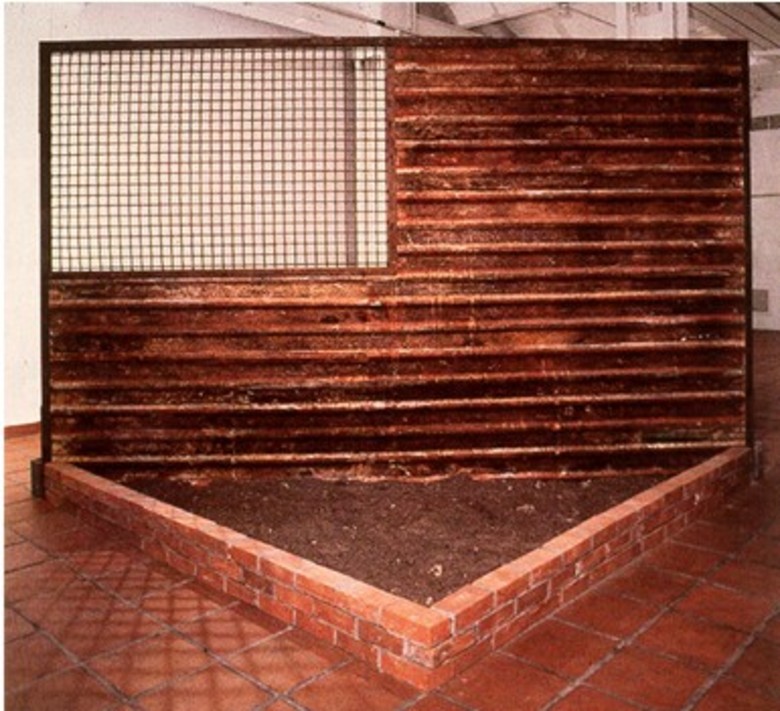
Fig. 5. Two
Artifacts: Touch of Evil and Displaced/Found Segment from the Mexican Border, 1993.
Photo Armando Rascón
|
6-7.
Fig. 6. Naco
Nocturnes exhibition at the De Young
Museum in San Francisco (2006).
Photo Armando Rascón
|
6-7.
Fig. 7. Marcos Ramirez ERRE, Stipes and Fence Forever (Homage to Jasper Johns), 2000. Sheet metal and iron.
Photo: Courtesy
|
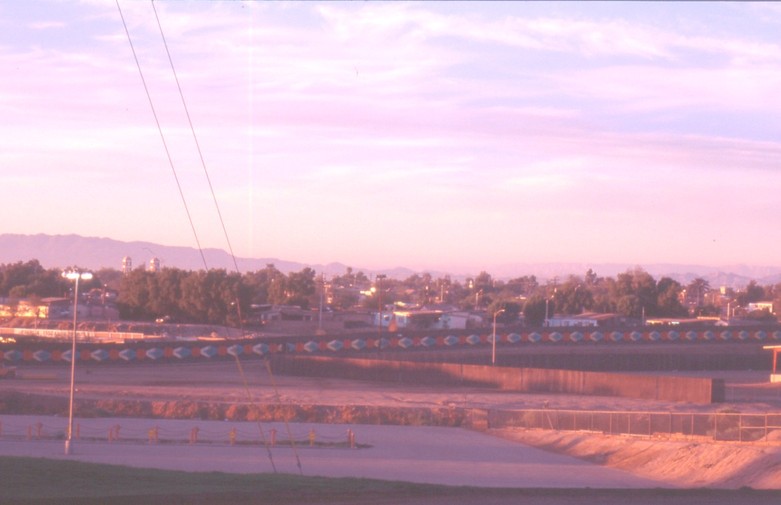
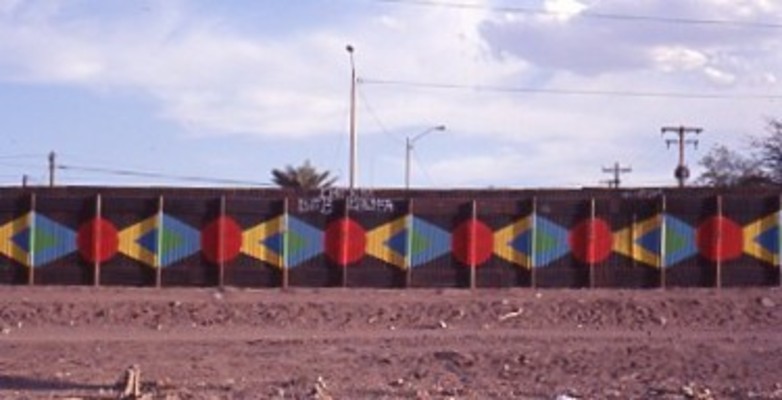
6-8.
Fig. 8. Armando
Rascón, Border Metamorphosis: The Binational Mural, 1998-2002.
Photo Armando Rascón
|
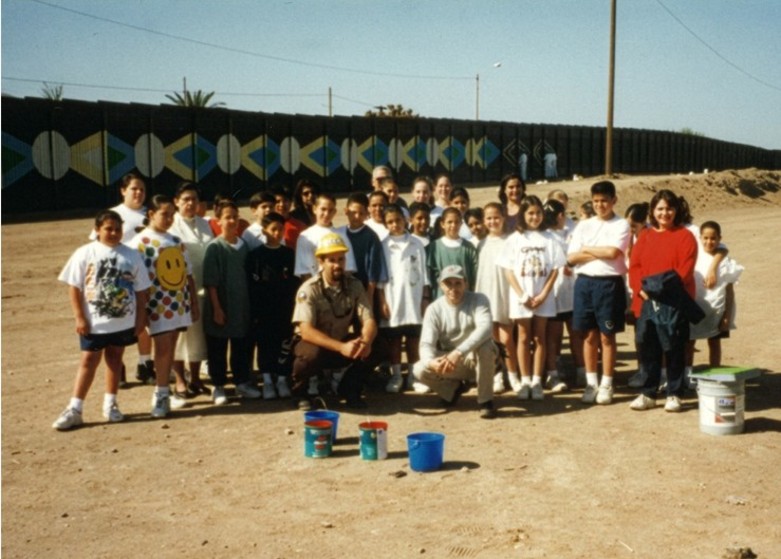
6-9
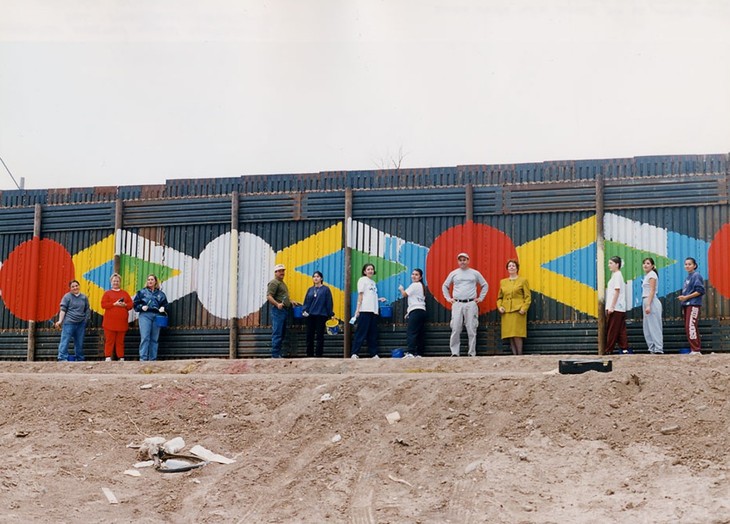
Fig. 9. St.
Mary’s Catholic School sixth grade students in front of Border
Metamorphosis. April 1999.
Photograph courtesy of Ana Brinkerhoff.
|
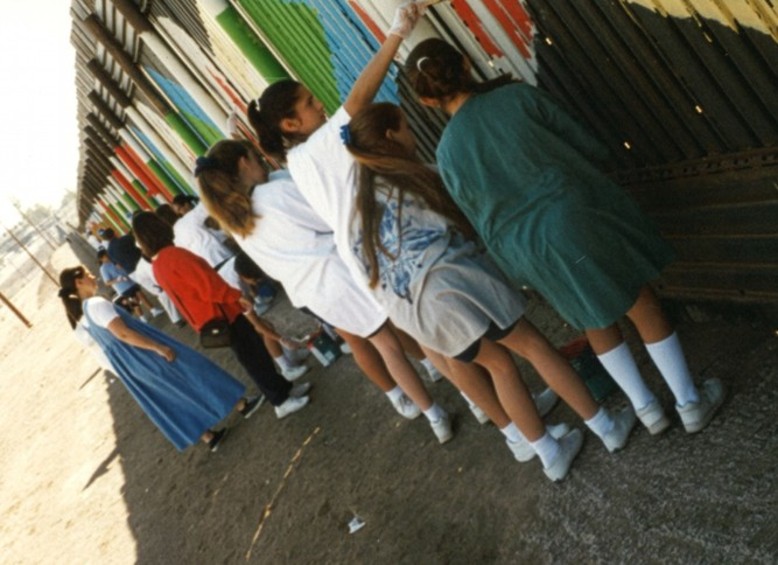
6-10.
Fig. 10. St.
Mary’s students painting Border Metamorphosis. April 1999. Author is
third from right.
Photograph courtesy of Ana Brinkerhoff.
|
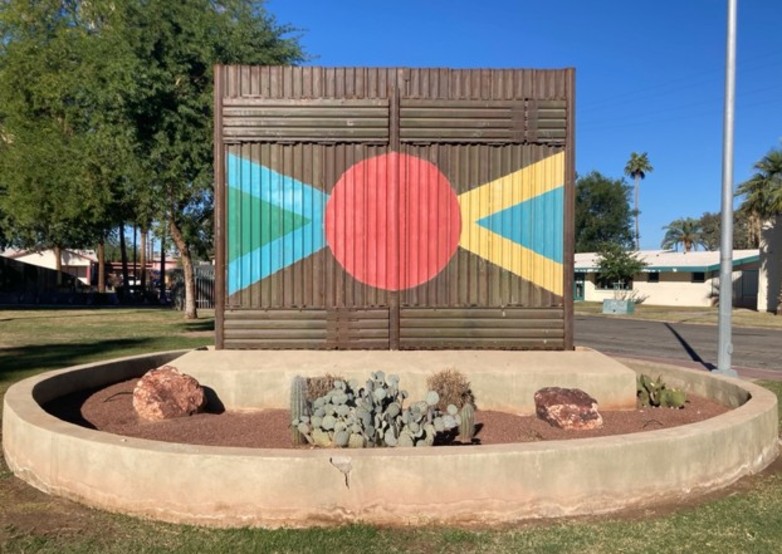
6-11
Fig. 11 Border
Metamorphosis Monument, Rockwood Plaza, Calexico. 2018-present.
Photograph
courtesy of Bill Sharman.
|
6-12
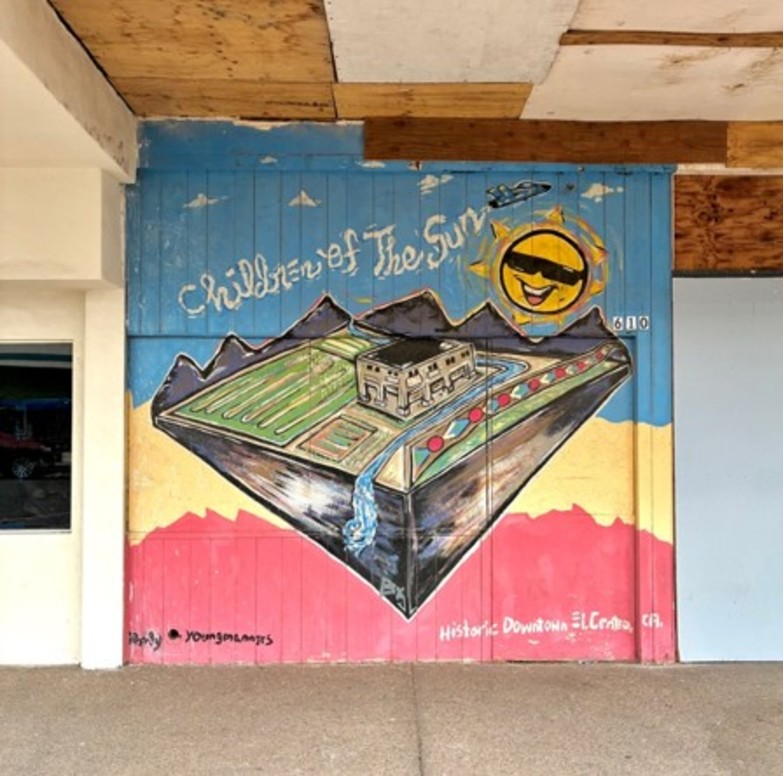
Young Manners. Children of the Sun, date unknown. El Centro Downtown.
Photograph courtesy of Bill Sharman.
[RR1]I will need to locate the
artist and get permission.
|
6-14
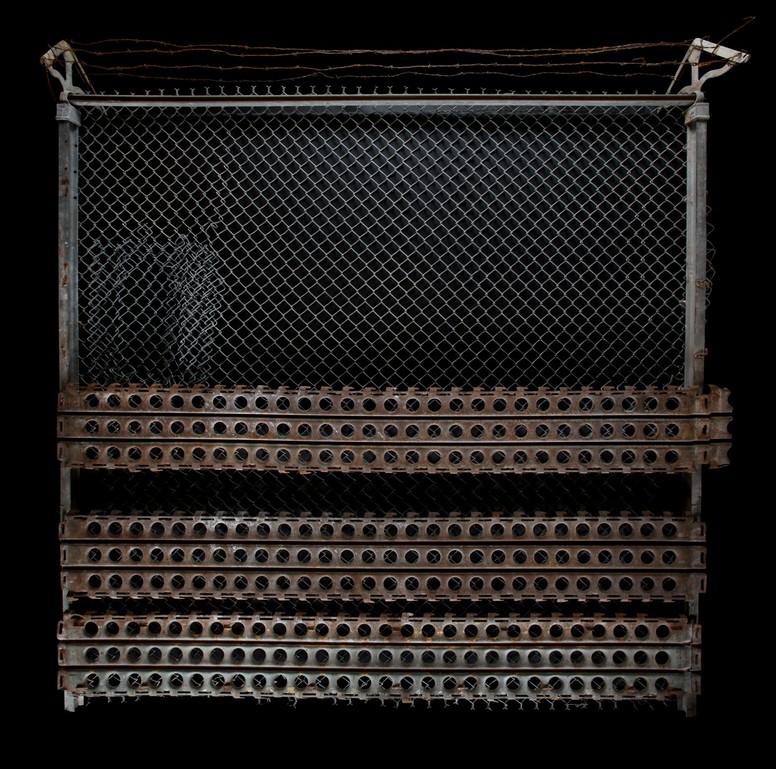
Fig. 14. United States-Mexico Border Fence, 1950's, metal (overall mesh fencing), in the Museum of American History. Gift of Armando Rascón.
Photo Courtesy of National Museum of American History, Smithsonian Institution.
Photo by Jaclyn Nash.
|
|
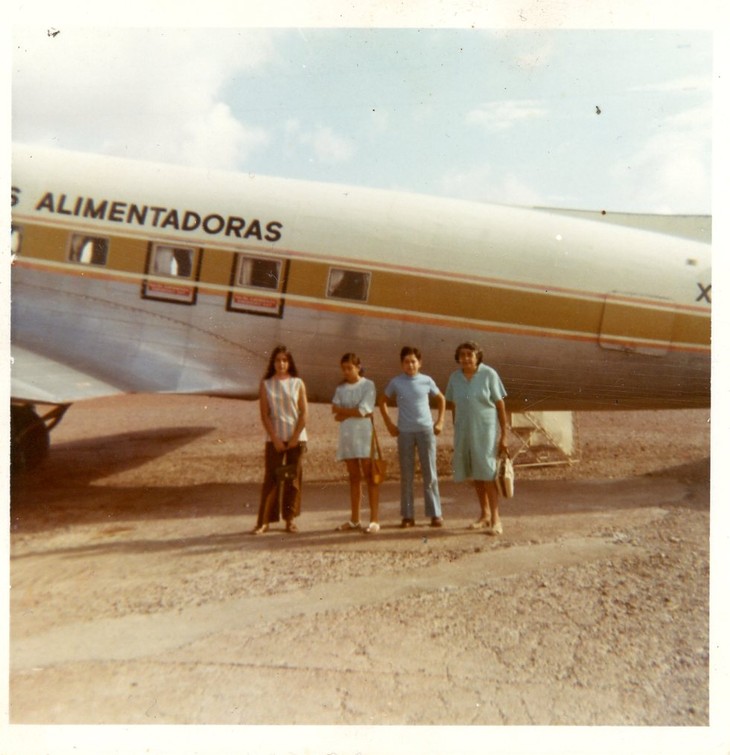
The landing strip a deserted earthen playa near La Bahía Santa Inés, Punta Prieta Baja California, Summer 1967, moments after landing. The plane soon returned back to Guaymas, Nayarit where we had originated and left us stranded with nothing but miles of dry Earth as far as we could see in one direction and the infinite Sea of Cortez to the other. It was several hours later, we spotted a tiny shape of dust on horizon, and soon a taxi materialized to drive us to Mulegé, my Nana Paquita's peaceful paradise oasis in the middle of parched Baja California. We were going to visit the place where she had served as head schoolteacher and where she had met her husband Andres Herrera, the Mulegé police chief during the Roaring Twenties. More importantly, we were going to pay a visit to the old cemetery where our great-grandfather was buried --the youngster that was 14 years old, in California Norte when it was still a Mexican State before the US/Mexican War ended in 1848 and changed his family's life forever. From left to right, Dianita (my cousin), Lupita (my sister), myself and Nana Paquita to my left. The photo was shot by my oldest sister Chachita. That was the journey that erupted my passion for lifelong observations of myriad a subject. Especially art and artists, and political history.
|
|
|